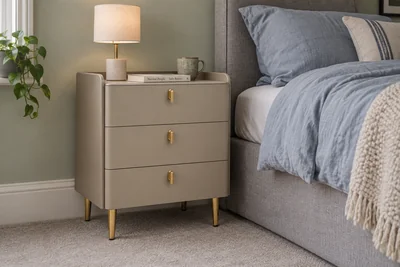
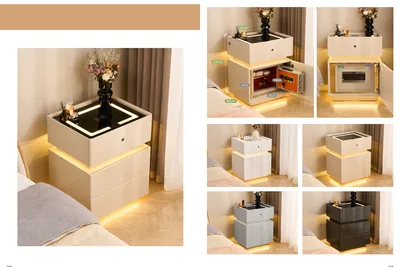
Smart bedside tables can work well in UK furniture showrooms, but only when the display keeps the product understandable. A buyer should be able to see the bedside role first, then discover LED lighting, wireless charging, drawer storage or a lockable feature as useful additions.
For UK trade buyers, the display should connect the product with a clear route into bedside cabinet supply, not make the range feel like a gadget wall. The most effective showroom bay usually has one core model, one compact model and one higher-feature model rather than too many near-identical SKUs.
For a divan or deep mattress display, use the bedside-height measurement guide to check the assembled bed, cabinet top and drawer reach before fixing a showroom label.
Start with the room scene before the feature list
A bed, lamp, phone, reading book and realistic floor clearance help customers understand the product faster than a table of specifications. The bedside table should sit at the correct height against the mattress, with drawer opening space visible and the top surface kept simple.
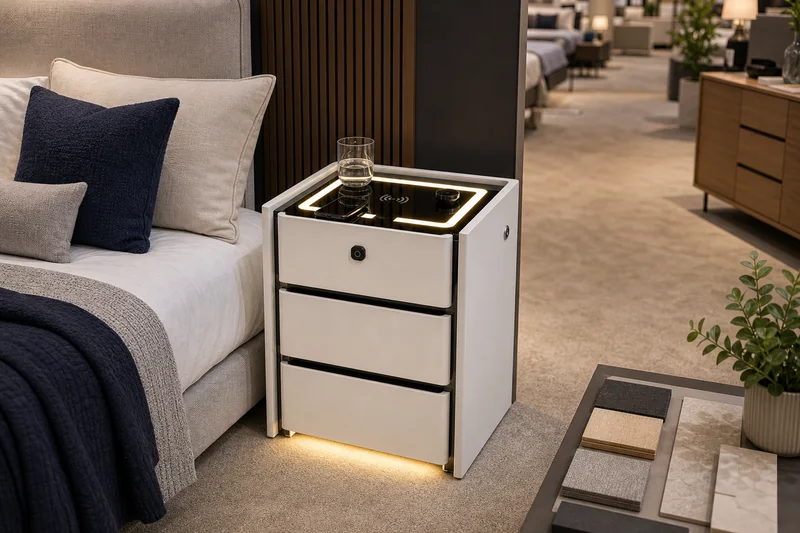
What the showroom team should be able to explain
- Which customer needs the compact model and which needs the larger storage model
- What the LED light is for: night use, ambience, or display effect
- Whether wireless charging, USB or lockable storage is standard or optional
- How the carton, assembly and after-sales parts work for the selected model
- Which finish can be repeated for a longer-running retail programme
If the showroom also handles distributor or dealer enquiries, link the display to a repeatable UK distributor supply structure. Sales staff need to know which products are suitable for samples, which are better for container orders, and which can support private-label packaging.
The mistake is to show every smart function at once. A customer may remember the light and charging feature, but they still judge the piece as bedroom furniture. Drawer alignment, surface quality, handle feel and stable packaging remain part of the purchase decision.
Use one hero display and one trade explanation
For a branded or private-label route, the showroom should also keep a short explanation of finish, packaging and sample approval. That gives the buyer a natural next step into a private label bedside cabinet programme without turning the display into an SEO-style sales pitch.
A good showroom display therefore does three things: it shows the product as a real bedside table, it makes the smart functions obvious without exaggeration, and it gives the trade buyer enough practical detail to discuss the next order.
Plan the display around an actual retail decision
A showroom buyer is usually comparing a bedside table against a familiar timber or painted alternative, not against another piece of consumer electronics. The display should therefore make the core furniture decision measurable: top height against a standard divan, usable drawer depth, clearance for a bedside lamp, stability on carpet, and the finish seen in normal room light. Put the charging pad or LED control where it can be tried, but do not make a member of staff demonstrate an app before the buyer understands the cabinet itself. This keeps the model relevant to independent furniture retailers, department-store concessions and bedroom specialists with very different selling styles.
The strongest comparison is normally a small three-model bay. One compact cabinet proves the footprint, one storage-led model explains everyday value, and one smart model shows the additional feature level. Each sample should carry the same simple information: external dimensions, fitted functions, supplied power components, finish code, carton dimensions and whether the item is delivered assembled or KD. When those facts are consistent, a retailer can assess margin, floor space and delivery fit without relying on a sales script.
Use a sell-through review before expanding the range
After the first display period, the useful evidence is not simply whether visitors liked the lighting. Record which questions repeat, whether staff can explain the charging arrangement without opening a manual, which finish attracts the most interest, and whether shoppers ask for matching bedroom pieces. A retailer that sees demand for a darker oak effect may not need a second cabinet shape; it may need the same proven structure in a tighter finish programme. That distinction protects the next order from unnecessary SKU growth and helps the factory keep hardware, drawer parts and carton design repeatable.
- Photograph the approved display with the exact finish code and handle or handleless front detail
- Keep the sample power lead and any adapter information with the product card rather than behind the counter
- Check that doors, drawers and top surfaces can be viewed from the normal customer approach
- Record objections about width, height, socket access and price separately from general styling comments
- Review whether the model needs matching bed, wardrobe or vanity references before adding another smart function
For a trade programme, a showroom sample should become a controlled reference rather than a one-off inspiration piece. The approved display, product card, carton specification and feature list should travel together into the quotation and replenishment record. That way a later order can reproduce the visual promise made on the shop floor, even when it is supplied through a different regional warehouse or a dealer network.