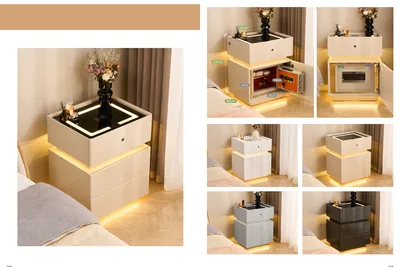
For UK online furniture retailers, the bedside table is not judged only by the product photo. It is judged by whether the carton survives parcel handling, whether the customer can understand the assembly sequence, and whether the finished cabinet looks like the listing after delivery.
This is why a sourcing brief for online channels should treat packaging, return prevention and instruction design as part of the product specification. A smart bedside table with LED lighting, wireless charging or drawer storage needs the same visual appeal as a showroom item, but it also needs a predictable unboxing experience.
Start with the parcel journey, not only the cabinet
Many avoidable return issues begin before the product reaches the bedroom. Corner damage, scratched glossy tops, missing fittings and unclear wiring instructions can turn a good product into a poor customer review. The carton plan should therefore be confirmed together with the model, not after production.
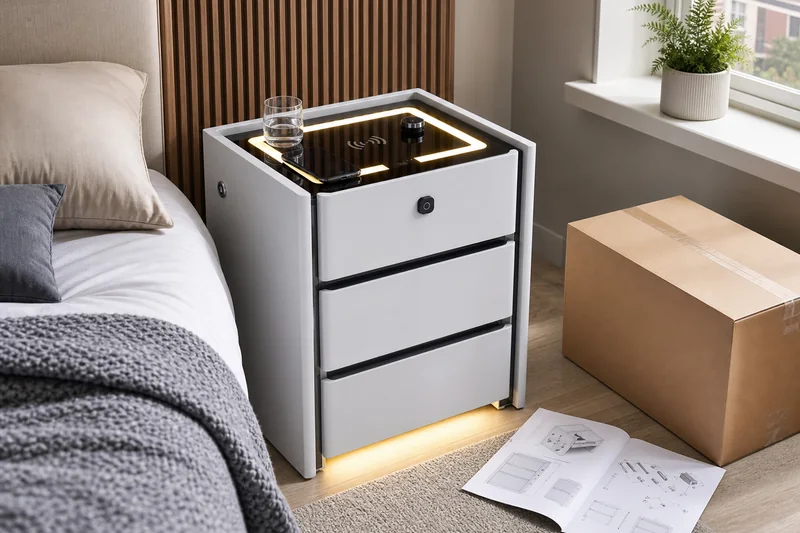
What to confirm before sampling
- Carton drop protection for corners, drawer fronts and glossy top panels
- A fittings pack that is separated, counted and easy to identify
- Assembly steps with clear diagrams and minimal language dependency
- A spare-parts approach for feet, handles, rails, charging modules or adapters
- Product photos that match the packed version, including finish and drawer alignment
The instruction sheet should also match the UK sales channel. Marketplace customers may assemble the product without installer support, while trade buyers may be supplying furnished rentals or smaller project batches. The clearer the instruction, the lower the support burden after delivery.
For a first order, it is useful to approve a packed sample, not only an assembled sample. Open the carton, check the protection sequence, assemble the bedside table from the supplied sheet, and record any point where the customer may hesitate. That record is more valuable than a general promise of “strong packaging”.
Use returns data to choose the next carton revision
A returns report should separate transit damage, missing hardware, finish expectations and assembly confusion. That distinction helps an online seller decide whether to revise the carton, the instruction sheet, the spare-parts pack or the product itself. For the next range review, compare this information with the intended UK wholesale supply route rather than treating every return as a customer-service issue.
The first replenishment order is also the point to decide which components can be held locally. Drawer runners, handles, feet and charging modules do not need the same stock policy. Retailers planning a wider catalogue can use the distributor supply page to frame the SKU, carton and after-sales discussion before committing to more variants.
For a branded offer, keep a photographed sample record beside the approved carton, assembly hardware and listing dimensions. That record gives the buyer a practical reference when a later order changes finish, handle or feature package. It also makes a private-label bedside cabinet programme easier to repeat without losing the original specification.
Turn delivery evidence into a product requirement
UK parcel networks expose bedside cabinets to handling that a showroom sample never sees. A buyer should test the approved packed sample with the same corner protectors, internal boards, bags and fittings layout proposed for production. The test does not need to imitate every carrier route; it should identify where the product can move inside the carton, where a drawer front can receive impact, and whether the top panel can rub against loose hardware. Photograph the packing sequence before it is sealed. Those images become a useful reference when a warehouse, marketplace partner or customer-service team needs to distinguish transit damage from an assembly issue.
Returns should also be classified at component level. A damaged leg, a missing cam lock, a scratched top and an incorrectly connected LED module require different remedies. If they are all reported as a failed bedside table, the next order may add expensive packaging without fixing the real cause. A short return code list makes the pattern visible and allows the retailer to decide whether to hold a small domestic spare-parts pack, revise a drawing, change a protection layer or improve the listing photographs.
Make the listing and the assembly pack agree
The online listing must show what the customer receives, not an idealised version of the cabinet. State the assembled external dimensions, useful drawer space where relevant, the number of parcels, the required wall or socket clearance for smart functions and whether tools are included. The instruction should use the same component names as the parts bag and should show the order in which rails, feet, drawers and electronic pieces are fitted. This is particularly important when a model has a wireless-charging top or integrated lighting, because an otherwise straightforward cabinet can become confusing if the cable route is hidden until the last page.
- Approve the packed sample as well as the assembled sample
- Use a parts count that matches the labels on the hardware bags
- Show the power lead, adapter position and socket clearance in the listing images
- Keep finish photographs under neutral light beside the approved colour code
- Assign separate return codes for transit damage, missing hardware, assembly difficulty and feature faults
For repeat orders, retain the original carton photographs, drawing revision, fittings count and instruction version beside the purchase order. That record reduces the risk that a small change in drawer runner, finish film or charging component quietly reaches the customer while the product page still describes the previous version. It also gives the retailer a practical basis for deciding which spare items should be held locally and which can wait for the next factory shipment.