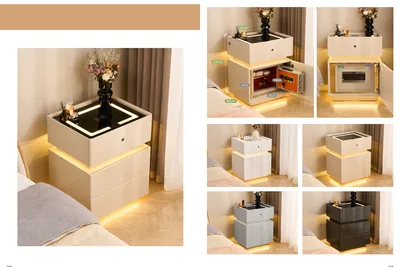
An OEM bedside table supplier checklist should start before the factory quote, not after the price is received. For UK importers, wholesalers and private label furniture teams, the useful quotation is the one that already reflects product role, carton method, finish direction, smart components and reorder expectations.
The first supplier conversation should define the buyer's route to market. A distributor range, an online furniture catalogue, a serviced-apartment package and a private label bedroom line may all use bedside cabinets, but they rarely need the same sample set. For brand-led supply, prepare the basic decisions through the private label bedside cabinet route before asking for a formal quotation.
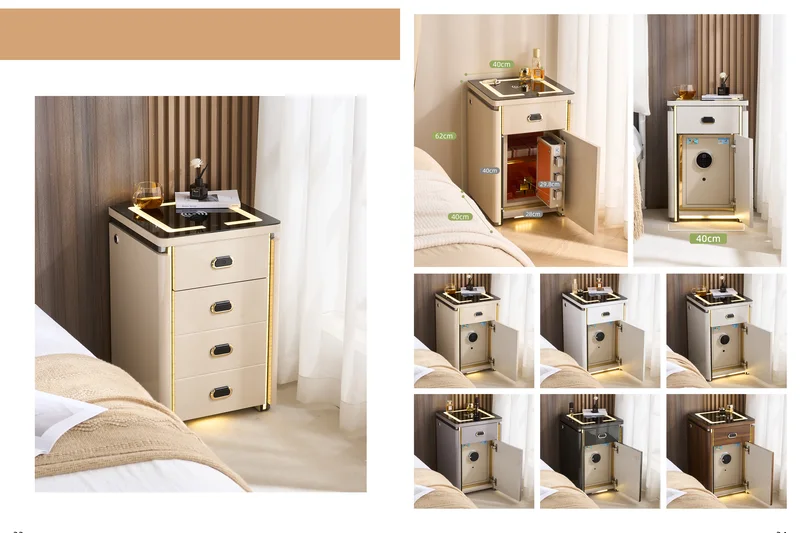
Define the quotation scope
Start by separating standard catalogue selection from OEM adjustment. A standard model request can focus on SKU, finish, quantity and carton requirements. An OEM bedside table request should add drawing changes, drawer hardware, charging module expectations, logo or label needs, and target packaging format.
- Confirm whether the buyer needs standard models, adjusted models or a private label programme.
- List target dimensions, drawer layout, finish direction and smart functions for each SKU.
- Share expected quantity per SKU instead of only asking for a general MOQ.
- Identify whether UK plug, USB, wireless charging or LED component details are required.
Check factory response quality
A useful supplier response should do more than send a unit price. It should clarify what is included in the quotation, which parts are standard, what needs sampling, and which packaging or labelling details affect cost. If the response does not mention carton strength, hardware, finish stability or component lead time, the buyer may not have enough information to compare suppliers properly.

For UK B2B buyers, the quote should also make the next step clear. A first sample order may test construction, finish and packaging, while a bulk order should lock carton marks, instruction sheets and smart component specification. Buyers planning wholesale or distributor supply can connect this checklist with the wholesale bedside cabinet supply page before submitting final requirements.
Prepare the enquiry package
Before sending the enquiry, assemble the practical files and notes: target model links, expected finish, order quantity, packaging preference, logo position, channel requirements and sample timing. A concise package helps the factory return a usable quotation and reduces the risk of comparing prices that are based on different assumptions.
When the requirement includes a smart bedside table, include charging function, LED detail, cable or plug expectations and any compliance notes. For a simpler wooden bedside cabinet, focus on construction, drawer slide, finish, carton protection and repeat-order availability.
Define the commercial brief before comparing factory prices
An OEM quote is only comparable when the factories are pricing the same cabinet. Before asking for a number, the buyer should set the intended customer, target retail position, external dimensions, material expectation, finish direction, smart functions, packaging route and first-order volume. A photo alone is not a specification: it does not confirm board thickness, drawer runner type, rear-panel treatment, power configuration or whether the model is shipped assembled. A written brief also helps the buyer separate a genuine engineering question from a cosmetic preference that can be decided after the first sample.
For a UK brand, the first quotation should make assumptions visible. Ask which items are included in the unit price, which require a separate tooling or certification discussion, how finishes are approved, and what changes would move the MOQ. The factory should identify components that are common with other models, because shared runners, feet, handles or LED modules can make a small programme more serviceable. It is better to choose a dependable shared component family than to create a unique feature that cannot be replaced on a later order.
Use a staged sample review
A useful sample review has three checkpoints. First, assess proportions, finish and function on the assembled cabinet. Second, inspect construction details that the customer will not see immediately: drawer alignment, fixing points, cable routing, edge treatment and the way a component can be replaced. Third, open the production-intended carton and follow the supplied assembly or unpacking process. Each point should be recorded against the approved drawing rather than discussed only in email, so production changes do not become a matter of memory.
- Exact width, depth and height, including feet and top overhang
- Material and finish call-outs for visible faces, internal surfaces and rear panels
- Drawer runner, handle, charging, LED and adapter specification
- Carton size, gross weight, protection layout and assembly state
- Sample approval record, change-control process and availability of service parts
The quote should finish with a clear next decision: proceed with a development sample, select an existing platform with a branded finish, or reduce the feature set to meet a target price. This prevents a private-label discussion from drifting between unrelated model ideas. It also helps the buyer protect lead time, because the factory can focus drawings and sourcing effort on the cabinet that will genuinely enter the range.